
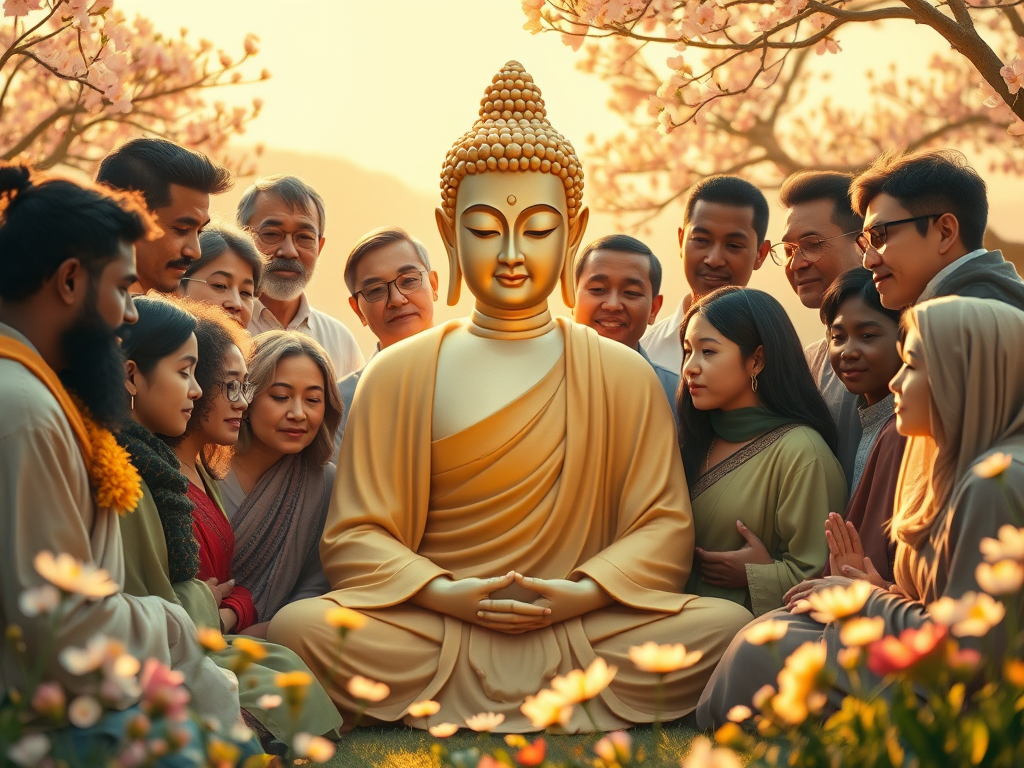
Answer: Society exists because people love and care for one another. Through love and compassion, people develop a sense of responsibility for one another, and this care helps to alleviate suffering in the world.
However, there’s a paradox: because human love is often limited, we tend to favor those we love, forming exclusive groups that can easily lead to conflict with others in the community. Love is meant to eliminate hatred, but narrow-minded love can actually lead to division and enmity.
The Buddha taught about boundless compassion as a quality of an Enlightened Being. An Enlightened and Liberated One, who has transcended the ego, must possess a limitless love that extends to all beings, covering all places and reaching all forms of existence. For those who have not yet attained enlightenment, it is critical to practice directing their love towards all beings in this way. Each day, we should consciously cultivate love for all sentient beings and humbly pray for the Buddha’s blessings to help extend this compassion to all beings. Over time, we will naturally find it easier to love others more deeply.
For lay practitioners, it may be challenging to extend compassion universally due to the heavy responsibilities of family life. The obligations of marriage, parenthood, legal duties, and the pressures of daily life create significant burdens. On the other hand, monastics may find it easier to practice and cultivate compassion.
Actually, love and compassion are luxuries that are not easy to achieve. We don’t easily feel love for others unless they have done something significant for us. However, following the Buddha’s teachings, we must strive to love all beings unconditionally. But it is not easy to cultivate compassion on our own, so we must pray to the Buddha earnestly to develop the compassion within us. Once we have compassion in our hearts, we will find it easier to practice meditation and achieve the state of mindfulness.




 BUDDHISM FOR BEGINNERS
Leave a comment