Answer: Human life typically requires the support of companions to ease the burdens of life and a certain level of material comfort to reduce hardships. Therefore, solitude and material deprivation are generally seen as forms of suffering for people.
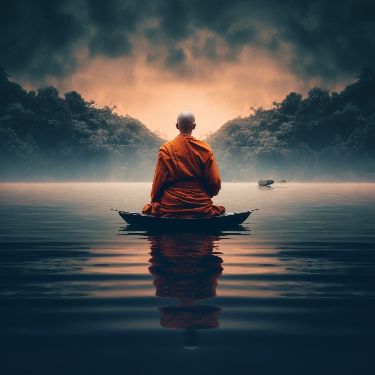
Some ascetics, after attaining certain spiritual abilities, demonstrate a greater capacity to endure hardships than ordinary people. They may challenge themselves by living in solitude and deprivation (austerity). However, solitude and deprivation are not the goals of spiritual practice. Because if spiritual practice led only to loneliness and deprivation, no one would want to pursue it. We may admire someone who can endure solitude and deprivation, but most of us would not choose to practice in such a way. Moreover, society does not encourage everyone to live that way because if everyone lived in deprivation, no one connected or cooperated with others, this would result in an impoverished society.
We should see living in solitude and deprivation as a temporary challenge to strengthen spiritual power at certain times, rather than as the ultimate aim of spiritual practice. The true purpose of spiritual practice is to attain enlightenment and to guide others, helping them to achieve enlightenment as well.



 BUDDHISM FOR BEGINNERS
Leave a comment