
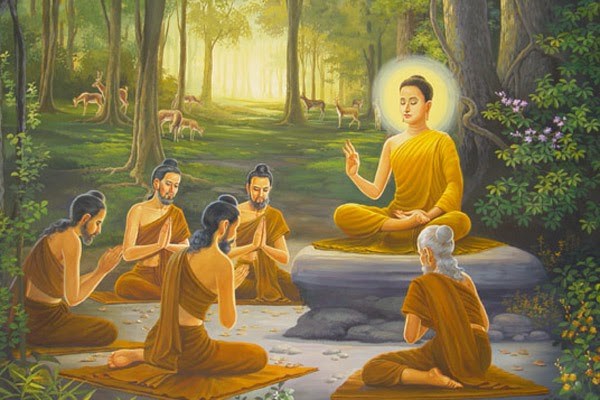
Answer: In the time when the Buddha was alive, many of His monk disciples attained the highest level of enlightenment, becoming Arahants. Some of these disciples were particularly outstanding in specific areas. The two foremost leaders of the Sangha were Venerable Sariputta, known for His supreme wisdom, and Venerable Maha Moggalana, renowned for His exceptional supernatural powers. Besides Them, there were many other extraordinary Arahant disciples. The Nikaya scriptures recorded numerous stories about these Arahants of that time.
For example, Venerable Ananda, who served as the Buddha’s attendant, was known for His phenomenal memory. He accompanied the Buddha throughout His life, listening to the Buddha’s teachings without forgetting a single word. After the Buddha’s passing, Venerable Ananda played a crucial role in reciting and preserving the Buddha’s teachings for future generations.
Venerable Rahula, discreetly employed various means to protect the Buddha’s monastic community (Sangha) from the intense opposition and sabotage of non-Buddhists, a task that was far from simple.
Venerable Maha Kassapa set an example of a simple and austere life. He often entered deep absorption in meditation for seven days at a time. After the Buddha’s passing, he became the spiritual leader of the Sangha.
Venerable Subhuti was known for His boundless compassion, showing a deep love for all creatures, even ferocious animals.
Venerable Kaccana was famous for His ability to engage in discussions and lead conversations, which could convert even the most skeptical listeners to understand the true Dharma.
Venerable Gavampati once halted a raging flood to protect the monks sleeping by the riverbank.
Venerable Pindola Bharadvaja once flew on a stone over the city of Rajagaha, an event was witnessed and amazed all people in the city.
At that time, with the Buddha’s direct guidance, countless disciples attained enlightenment. Even many lay followers achieved various stages of Sainthood, up to the stage of Anagami (Non-returner, the third stage).




 BUDDHISM FOR BEGINNERS
Leave a comment