
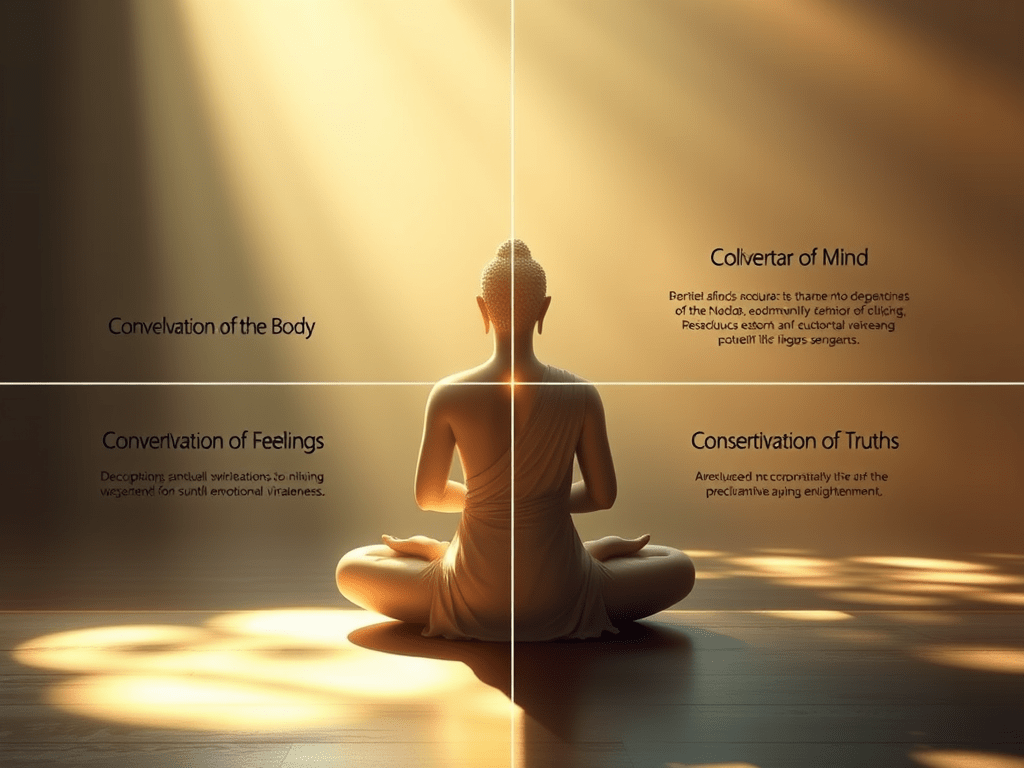
Answer: The Buddha taught the Four Foundations of Mindfulness, which encompass four key practices: contemplation of the body, contemplation of feelings, contemplation of the mind, and contemplation of mental objects.
- Contemplation of the body involves maintaining awareness of the body in all activities, whether walking, standing, sitting, or lying down. With the mind settled with mindfulness through prior practices, practitioners observe and recognize the characteristics of the body, such as its impermanence, impurity, and burdensome nature with many needs and desires.
- Contemplation of feelings: As mindfulness deepens, practitioners constantly perceive a pervasive sense of mindfulness throughout the body. This mindfulness is invisible yet clearly present, helping to understand that the mind is still ordinary, containing many hidden flaws and still influenced by subtle underlying sensations.
- Contemplation of the mind: With a very deep state of meditative ecstasy, practitioners clearly see themselves as the knowing aspect of consciousness and the source of all actions and realize that deep within the mind, ignorance and defilements still persist.
- Contemplation of Truths: At this stage, practitioners have attained liberation and enlightenment, where the sense of self dissolves, and they become one with the ultimate truth of the universe.
Before entering the practice of the Four Foundations of Mindfulness, practitioners must follow a preliminary path, which is Mindfulness of Sin. This involves recognizing oneself as a mass of deep-seated karmic burdens (as reflected in the slogans related to the three types of “houses”). Practitioners should focus more awareness on the bottom of the abdomen, and skillfully maintain a slow, minimal, and gentle breath. By practicing these techniques, mindfulness will naturally emerge, leading the way into the Four Foundations of Mindfulness.




 BUDDHISM FOR BEGINNERS
Leave a comment