

-
Question 92: DOES A TRANQUIL MIND INDICATE THAT ONE HAS ATTAINED ENLIGHTENMENT?
Answer: There are various levels of calmness in the mind, and not all types of calmness are the same. It’s similar to how a house can be clean or dirty, but there are many different types of houses, and not all clean houses are alike. A mansion may be clean… Read more ⇢

-
Question 91: HOW CAN WE RECOGNIZE SOMEONE WHO HAS ATTAINED ENLIGHTENMENT SO THAT WE CAN SHOW THEM THE APPROPRIATE REVERENCE?
Answer: It is very difficult to know if someone has attained enlightenment because their outward appearance and behaviour often seem quite ordinary. Unless we have achieved a certain level of enlightenment, it’s unlikely that we can recognize someone at the same level. For example, a person who has achieved the… Read more ⇢

-
Question 90: CAN YOU ELABORATE ON THE CONCEPT OF ENLIGHTENMENT IN BUDDHISM?
Answer: The Buddha’s definition of enlightenment is very profound. Even if one can enter a deep state of meditative absorption, this is only considered a meditative achievement but it is not regarded as true enlightenment or attaining a stage of sainthood. True enlightenment, or Sainthood, is achieved only when one… Read more ⇢
-
Question 89: IN THE THREE NOBLE JEWELS (TRIRATNA), THE SANGHA REFERS TO ENLIGHTENED MONKS AND NUNS. HOW CAN THERE BE MORE PRACTITIONERS WHO TRULY ACHIEVE ENLIGHTENMENT TODAY?
Answer: According to the traditional definition, the Three Noble Jewels consist of the Buddha, the Dharma, and the Sangha. The Buddha is the Supremely Enlightened Master who founded the path. The Dharma is the teachings and doctrines preached by the Buddha. The Sangha refers to the community of saintly disciples,… Read more ⇢

-
Question 88: HOW DID THE FORMATION OF DIFFERENT SECTS WITHIN BUDDHISM OCCUR?
Answer: About a hundred years after the Buddha’s passing, Buddhism split into two main sects: the Mahāsāṃghika (Great Assembly) and the Theravāda (Teaching of the Elders). This division arose due to differences in the interpretation of the teachings. The Theravāda tradition has been preserved and is still practiced today in… Read more ⇢

-
Question 87: WHY ARE THERE FEWER PEOPLE ATTAINING ENLIGHTENMENT IN LATER TIMES COMPARED TO WHEN THE BUDDHA WAS ALIVE?
Answer: Enlightenment is an exceedingly profound and lofty state, far beyond the reach of the ordinary human mind. The gap between the ordinary and the Enlightened is vast. In the time of the Buddha, when someone achieved a certain spiritual result in meditation, the Buddha would confirm the exact stage… Read more ⇢
-
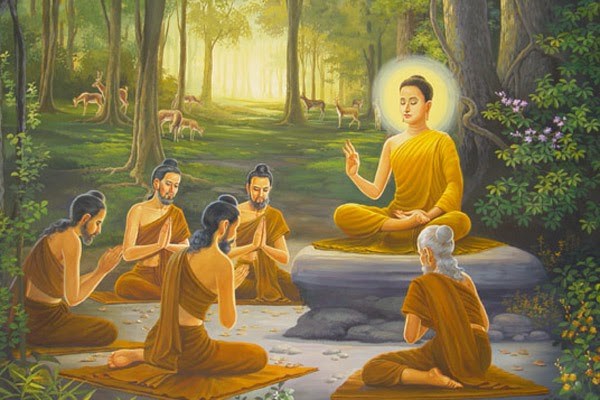
Question 86: DID THE BUDDHA HAVE MANY EXCELLENT DISCIPLES?
Answer: In the time when the Buddha was alive, many of His monk disciples attained the highest level of enlightenment, becoming Arahants. Some of these disciples were particularly outstanding in specific areas. The two foremost leaders of the Sangha were Venerable Sariputta, known for His supreme wisdom, and Venerable Maha… Read more ⇢
-
Question 85: THROUGHOUT HUMAN HISTORY, ACROSS VARIOUS REGIONS, WE HAVE HEARD OF THE PHENOMENA LIKE SPIRIT POSSESSION, WHERE ONE SPIRIT OR ENTITY TAKING CONTROL OVER ANOTHER PERSON’S BODY. WHAT IS BUDDHISM’S PERSPECTIVE ON THIS?
Answer: In both the human and animal realms, beings possess a physical body paired with a soul that is tightly attached to it. This attachment between the soul and body is what gives rise to mental activities, most prominently seen in the brain’s functions. Since scientists have not yet identified… Read more ⇢
-
Question 84: WHEN PEOPLE HAVE A GOOD CONNECTION FROM THE PAST, THEY EASILY HAVE AFFECTION FOR EACH OTHER. WHAT IS THIS CONNECTION?
Answer: According to the Law of Karma, the feelings of love or dislike among people do not arise randomly; they stem from past karmic connections. If two people have positive karma with each other, having loved and helped one another in previous lives, they will naturally develop a positive affinity… Read more ⇢

ABOUT THE AUTHOR JANNA
JANNA is the pen name of a certain monk who does not wish to use his real name. He is likely mature enough to understand that fame, wealth, and glory are as fleeting as morning mist.
In Pali, “JANNA” means purity, so it’s unclear which country he’s from. However, he seems to have studied the Nikaya scriptures.
Although he writes about Buddhism, he appears to desire unity with other religions to contribute to the cause of world peace. He attempts to demonstrate how differences can complement one another…