-
Question 38: HOW ABOUT PEOPLE FROM OTHER RELIGIONS WHO WORSHIP THEIR DEITIES? WHAT KIND OF MERIT DO THEY GAIN?
Answer: This depends on the nature of the deity in that religion. If the deity is an Enlightened One, then revering them can bring great merit. However, if the deity does not possess qualities of enlightenment, then worship may not result in as much merit as expected. Many followers believe… Read more ⇢

-
Question 37: ACCORDING TO THE LAW OF KARMA, WHAT CAN ONE DO TO QUICKLY GAIN GREAT MERIT?
Answer: The greatest merit comes from guiding, supporting, and helping sentient beings in their spiritual practice to achieve enlightenment. However, to become a master with enough virtue and wisdom to instruct others, one must already have accumulated substantial merit in the past, so it is not easy to quickly achieve… Read more ⇢
-
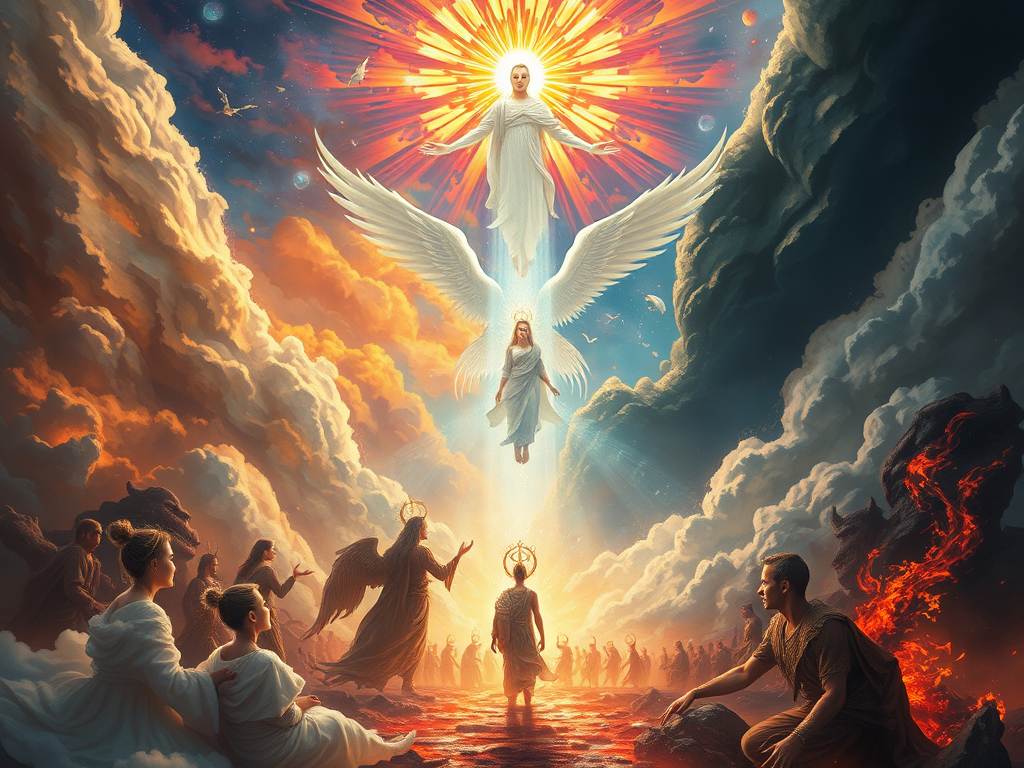
Question 36: HOW DOES REBIRTH BETWEEN DIFFERENT REALMS OCCUR?
Answer: Beings are reborn into realms that correspond to their karma. For example, those with great merit are reborn into the Human realm or ascend to the Heaven realms. Those with many sins descend to the Animal realm, the realm of Hungry ghosts, or the Hell realm. Those who have… Read more ⇢
-
Question 35: HOW ARE THE REALMS IN THE UNIVERSE DIVIDED?
Answer: The realms of existence are divided in several ways: When categorized by composition, the Human Realm and the Animal Realm are considered realms of visible matter, while the realms of Heaven, Demi-God, Hungry Ghosts, and Hell are realms of invisible spirits. If divided by merit, the Animal, Hungry Ghost… Read more ⇢
-
Question 34: WHAT DOES IT MEAN TO CULTIVATE TOWARDS THE GOAL OF NON-SELF?
Answer: All sentient beings are influenced by the ego, which is the sense of self. This feeling of self is an illusion, but it governs human psychology. The larger the ego, the more a person becomes immoral, greedy, arrogant, aggressive, selfish, jealous, ambitious, and competitive. Most wise masters advise people… Read more ⇢

-
Question 33: HOW CAN WE KNOW IF OUR MERIT IS GREAT OR SMALL?
Answer: We carry a lot of negative karma from the past, which continues to influence us, while the positive karma we create in this life may not have yet matured into visible results, making it difficult to perceive our merit clearly. However, if we spend our lives doing good deeds,… Read more ⇢
-
Question 32: SOME PRIESTS ADVOCATE EXORCISING GHOSTS WHEN HOMEOWNERS DISCOVER A SPIRIT IN THEIR HOUSE. IS THIS RIGHT OR WRONG?
Answer: Spirits, like humans, can be categorized based on their merit: some have great merit, while others have little. Spirits with more merit have proper places to reside, while those with less merit wander in hunger and coldness. The temperament of spirits also varies; some are gentle, while others may… Read more ⇢
-
Question 31: IS IT A WRONG VIEW NOT TO BELIEVE IN THE SPIRITS OF THE DECEASED?
Answer: According to the Nikaya scriptures, the Buddha taught that not believing in the existence of the spiritual realm (transmigration) is considered a wrong view. We do not need to wait until death to understand this truth. By calmly reflecting, we can realize that death is not the end but… Read more ⇢

-
Question 30: IS REVERING DEITIES AND PRAYING TO THEM CONSIDERED RIGHT COMPREHENSION?
Answer: Actually, most deities introduced by various religions are mythical characters without a historical basis. The characteristics of these deities depend on the understanding of those who introduce them. If the introducer has a profound understanding, they will describe the deity as sublime; if their understanding is shallow, the deity… Read more ⇢
ABOUT THE AUTHOR JANNA
JANNA is the pen name of a certain monk who does not wish to use his real name. He is likely mature enough to understand that fame, wealth, and glory are as fleeting as morning mist.
In Pali, “JANNA” means purity, so it’s unclear which country he’s from. However, he seems to have studied the Nikaya scriptures.
Although he writes about Buddhism, he appears to desire unity with other religions to contribute to the cause of world peace. He attempts to demonstrate how differences can complement one another…